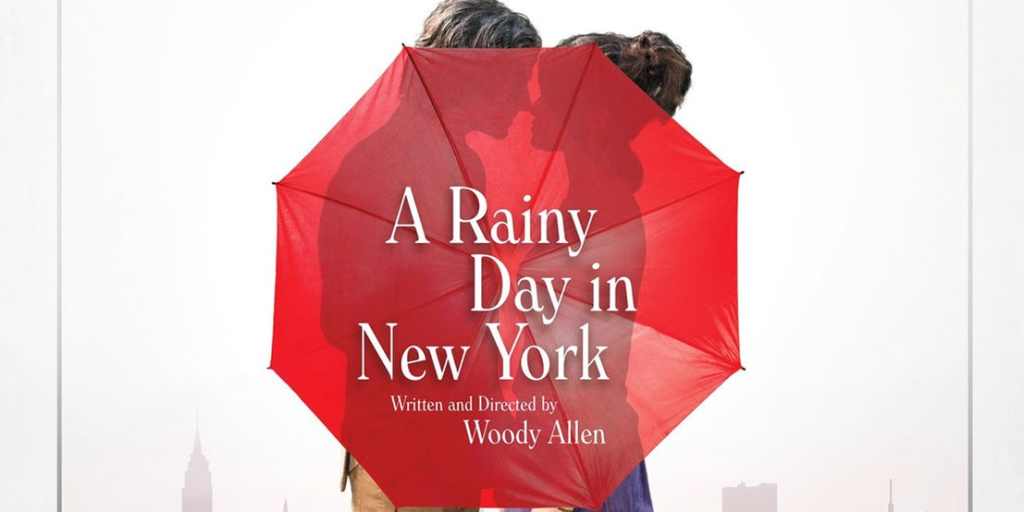
A watered down regurgitation of Woody Allen tropes from his “Manhattan” era. With this movie, he folds in on himself and becomes a caricature of what he once was.
CONTEXT
Let’s start with the most talked about. Amazon Studios did not release the film in the US because of the the allegations held against Woody Allen. Though the allegations of assault on his adoptive daughter Dylan date back to 1992; the Me Too movement, and the fact that his son (Dylan Farrow) uncovered the Harvey Weinstein scandal, brought the allegations back to the surface. Even though it was common knowledge for many years, the resurfacing made Amazon cut ties with the director and most of the cast donated their earnings from the movie (surely out of the goodness of their hearts and not simply out of fear of bad PR).
All allegations aside, Woody Allen has a problematic history with writing in predatory behavior towards women. This bothersome pattern dates back to Manhattan, where Woody Allen’s character (in his 40’s) dates a 17 year old girl and complains that she’s not deep enough. Even if the attitude towards dating younger women might have been different back then, it doesn’t change the fact that Woody Allen wrote in the script that his love interest was 17. It was in his power to make her 18, and not a minor. It’s just a year, but it makes a big difference. A Rainy Day in New York adds to that list of problematic storylines. In this film, a 21 year-old girl (legal! Phew..) is chased around by THREE separate middle aged men (Oof…). Now, if Woody Allen is trying to distance himself from the sexually predatory image he says is being unfairly pushed onto him, his movies aren’t helping his cause, though granted, they are not confessions or proof of any wrongdoing either.
WOODY ALLEN(S)
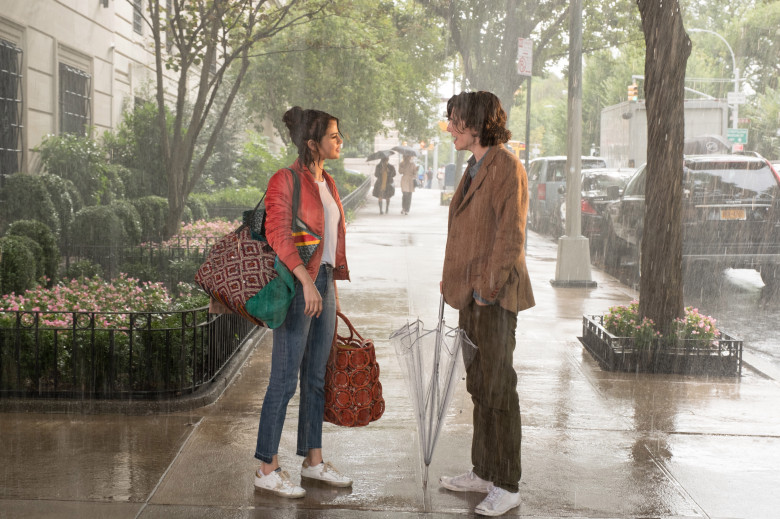
This whole movie can be boiled down to: “out of touch”. Out of touch director, for an out of touch increasingly niche audience, played out by out of touch characters. (Who else is sick of upper class New Yorkers in film?). The evolution of Woody Allen’s directorial style seems to be rather stagnant if he is doing the same things he did 40 years ago, like showing the Empire State Building in Black and White and making the protagonist an ersatz embodiment of himself. This seems more like the work of a legacy act rather than an artist seeking to create engaging content.
Equally, the characters are far from realistic and compose a dialogue never before heard in real life, unless all characters are a foil for Woody Allen himself (eg. “I shouldn’t imbibe so copiously” – uttered by a 21 year old college student from Arizona). This seems to be the issue with Woody Allen(s). Each main character becomes a Woody Allen impersonation and over the years, the quality has declined.
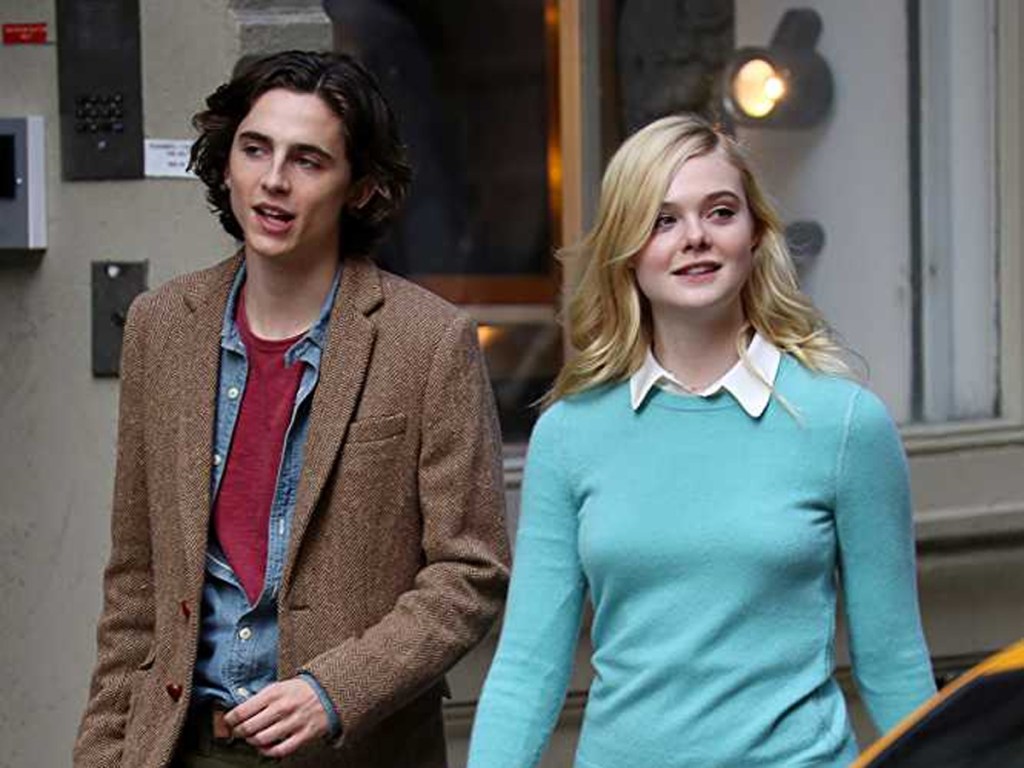
The worst part is that the old fashioned dialogue is spoken by actors as fresh faced as pre-pubescent teens.
These are the faces of 12 year olds.
These characters, Gatsby and Ashleigh, are a college couple whose lives have been uninterrupted boulevards of green lights and unending streams of wealth. Gatsby is supposed to be a fusion of Holden Caulfield and Jay Gatsby while remaining bumbly and neurotic, naturally. Ashleigh is a sweet ingenue enamored by Hollywood. These are not very original characters.
SPOILERS!!!!!
NB. There was a moment of hope where’s Gatsby’s mother reveals she was once a prostitute in Indiana. Even though that tugged at an element of real struggle and brought the story from the dizzying heights of wealth the characters display, (eg. Let’s get the suite at the Carlyle because betting money is “fake money”) this remains a passing moment. A movie with her as the central character might have been more compelling. Seeing her climb the echelons of class – only to be misunderstood by her own wealthy kids, would have been rich as a subject.
Instead we get the ramblings of a boy who’s known nothing but operas and Ivy League schools.
STUCK IN TIME
Largely, there were many gaps in understanding. A couple in their 20s that doesn’t text each other with updates? Come on. Either I missed it or it was unclear, but they seem rather involved to the point of taking a trip together, discussing marriage and wanting to meet the family. So that was hard to believe, especially considering that the whole film could have been changed with a minimum of texting or the incalculable social media platforms people contact each other with nowadays.
Another moment that seemed dated was whenever Gatsby talk about Jazz as if it were an alternative lifestyle- this is hardly the 1920s. Jazz has been accepted as an iconic movement and grown to become a century defining musical genre. In his musical upbringing, I’m sure he was even taught (by the mother he so despises) to play jazz.
The music in the film was mostly good, the highlight being a rendition by Gatsby of “Everything happens to Me” though – try as he might – T. Chalamet can’t grasp the intense sorrow put forth by Chet Baker, the clear inspiration for this interpratation of the standard.
A pleasant and welcoming surprise was Selena Gomez’s acting chops.
The stylistic choices that once shot Woody Allen to fame have now become out of touch, tired and dated – ⭐
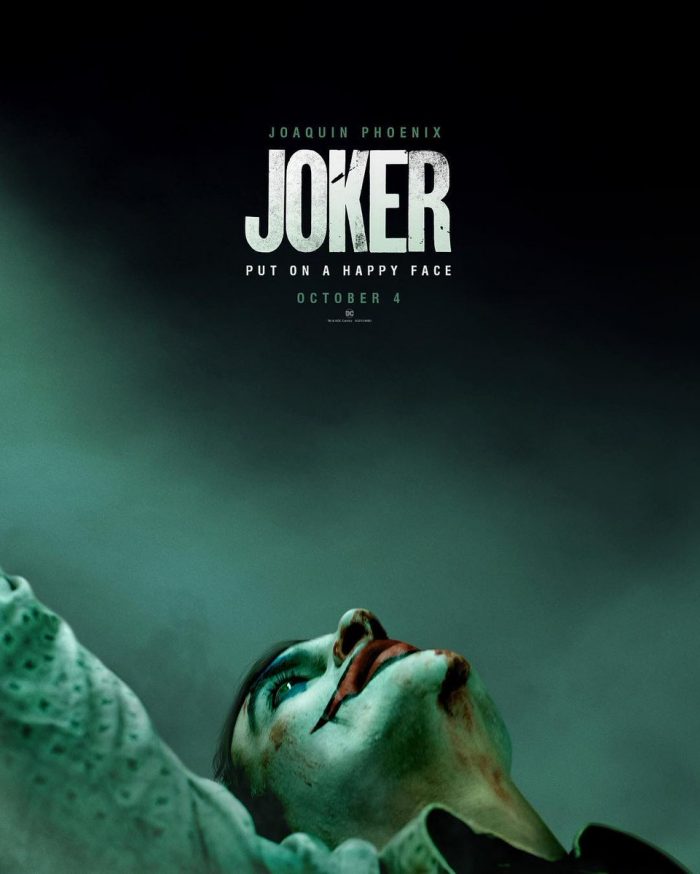
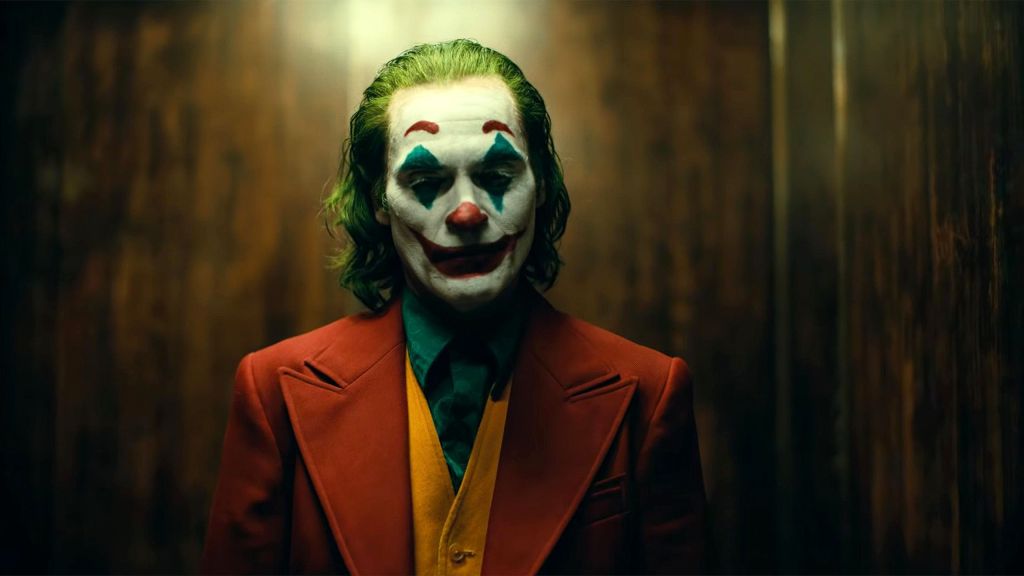
Character driven movie which follows the descentof a troubled man into becoming an urban, albeit violent, robin hood-esquepersona and a counter culture emblem set to shake the hierarchic social structure status quo.
A CHARACTER STUDY
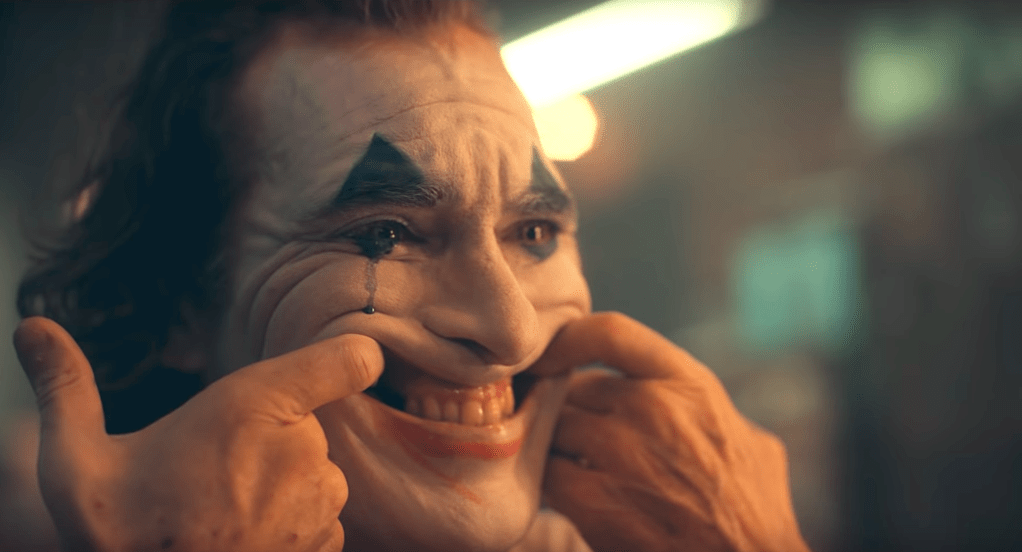
In the traditional origin story, one event serves as a trigger that changes the hero’s life forever. Whether it’s for a super hero, such as Peter Parker who gets bit by spider, gains powers, discovers how to use them (responsibly) or whether it’s with a villain. The villain arc usually goes like this: “brilliant scientist gets overwhelmed by own creation, falls into vat of toxic waste, gains superpowers”. This keeps the genre very much in the make believe world because we understand the actual consequences of those actions. We understand that a spider bite just leaves a nasty bump in real life or if it’s venomous it might hurt us, but ultimately not give us powers. Just like we understand that a toxic waste vat will kill or seriously injure us and not give us the power to harness electricity for example. This cements these stories in the world of make believe, fiction, fantasy. What’s interesting about Joker is how real it is. This movie is grounded in a believable setting and the hero (or rather villain’s) descent evolves through a collection of moments rather than a single spark igniting a character switch. There is no one traumatic incident Arthur Fleck (Joker) can harken back to when he decided to be bad, but rather a series of little moments that build up, amalgamating and eventually crescendoing into a chaotic and overwhelming drive towards violence that pushes our protagonist into crime and murder. This take offers a more subtle, perhaps more nuanced, (dare I say poetic?) and intimate portrait of how a man turns into a monster.
INFLUENCES
Set in the 1970s, Joker shows a grim, gritty picture of Gotham City, a city that serves as a substitute New York. It’s New York because we know of the lore and also because Batman (or Batman canon) films are usually filmed in NY (sometimes Chicago too). We also know it’s supposed to represent New York because in the movie because Arthur Fleck refers to finance bros as “Wall Street guys”. Now that we’ve established that Gotham is a fictionalized New York, it’s easy to draw comparisons to earlier cinematic works that take place in the actual New York, namely Scorsese films.
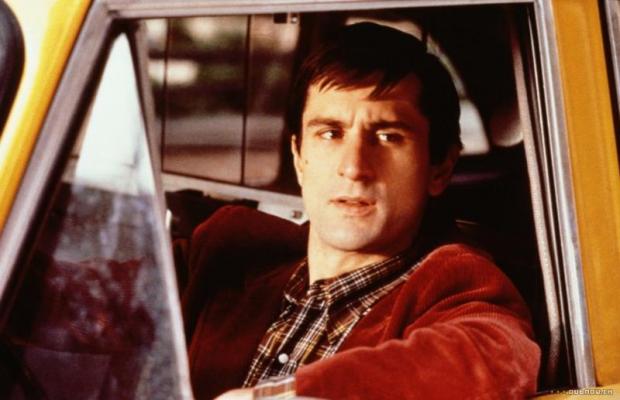
Two Scorsese films come to mind while watching Joker and they are Taxi Driver and The King of Comedy.
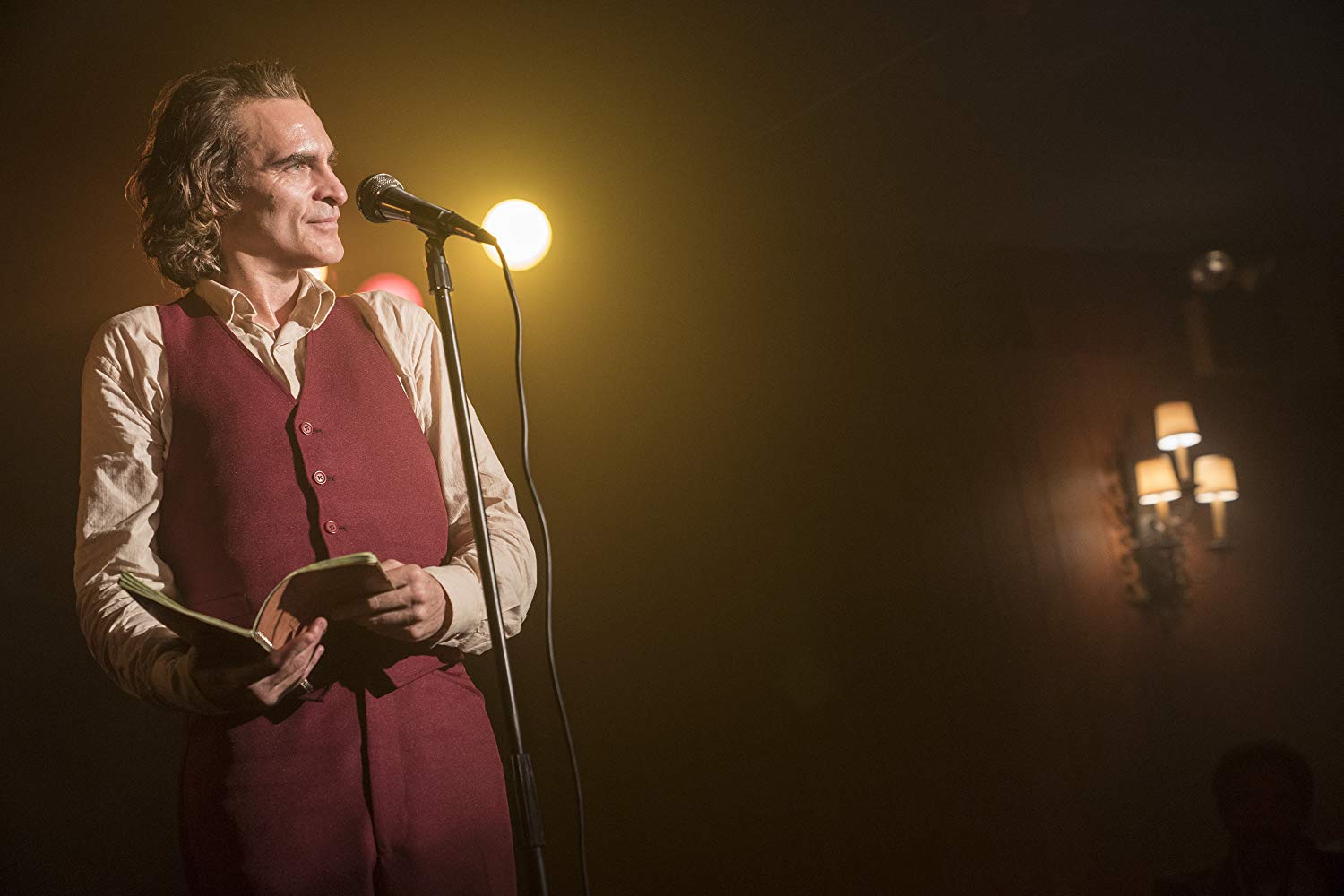
Taxi Driver is set in a similar timeframe as Joker and has a familiar backdrop in the gritty New York or New York like cityscapes. Whether it’s the porno movie theaters or the dirty metro lines these two movies bear a visual resemblance in their settings. Not only that, but the themes are also pretty analogous. Chasing after a politician (or politician to-be in Joker), these movies follow an unhinged protagonist as they turn to violence for liberation and more. There is even a scene where Joaquin Phoenix dances shirtless around the room with his pistol in his hand à la Robert de Niro playing Travis Bickle in the supremely famous “you talking to me?” scene. Perhaps the most compelling similarity is both movies toying with our perception of what actually is happening.
There are some moments in Joker where we as an audience are not sure what is actually happening in the story or if what we are seeing is a story concocted by Arthur Fleck’s imagination. We are sometimes led to believe it’s happening one way, but then later shown that it was all a fantasy stemming from twisted mind of our eponymous protagonist. The play between what’s real and what’s imagined leaves a lot of scenes open for interpretation. We are not sure what to follow and the confabulation of Arthur Fleck as an unreliable narrator makes him twist reality or manipulate the images we see on the screen. This storytelling tactic serves to heighten the feeling of chaos that permeates throughout this movie. This situation is similar to the ending of Taxi Driver and the debate as to whether Travis Bickle actually acted like we saw in the movie and lived to look back on it or whether it was the hopeful fantasy happening inside of his deranged mind.
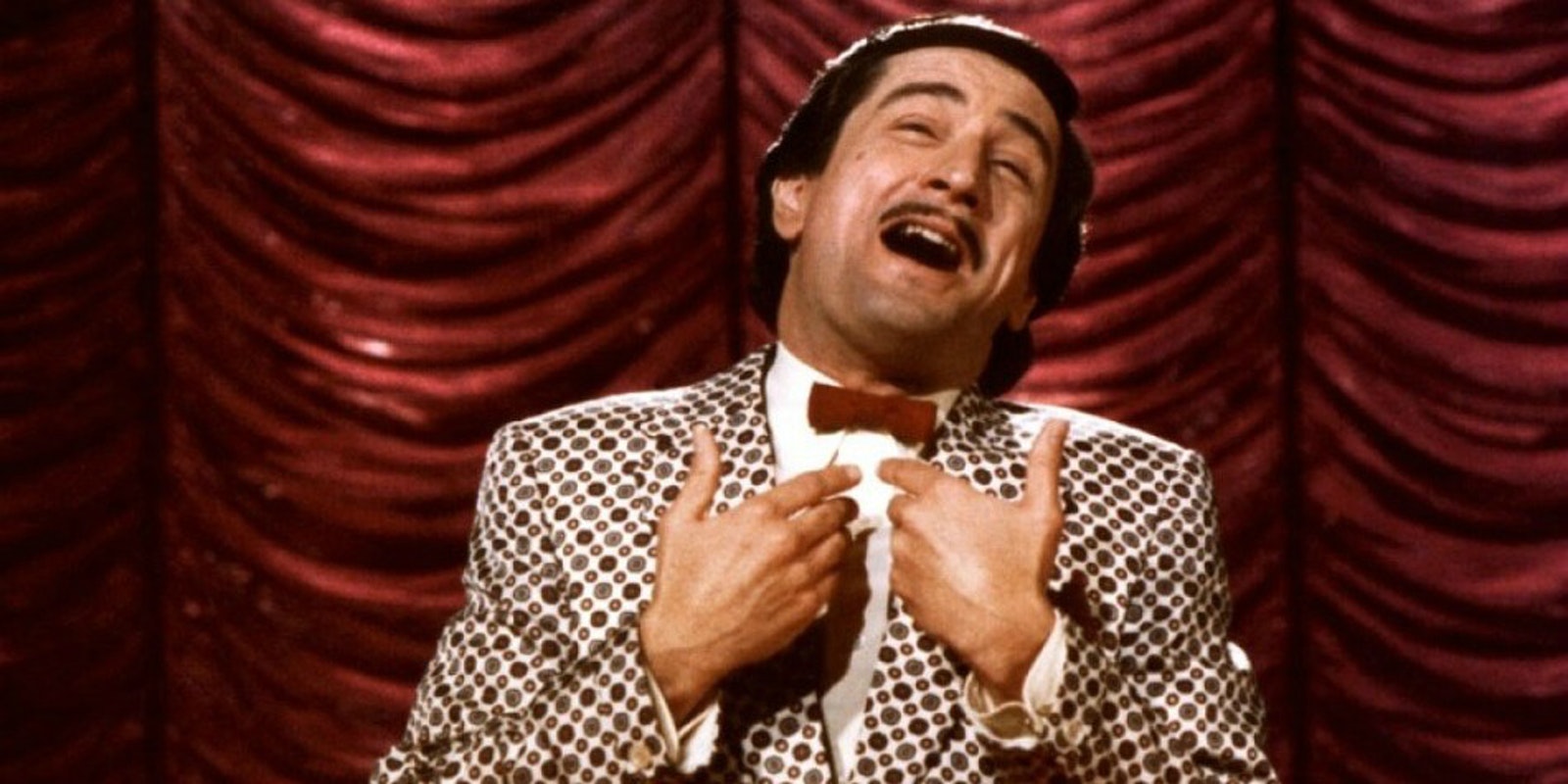
Now that we’ve explored the similarity between themes, let’s look at the similarity between story and content, which is where The King of Comedy comes in. The first obvious connection is the presence of Robert de Niro the actor, who plays a character in the late night TV world. The second connection is the tale of the persistence and delusion of a would-be comedian who’s sure he’s destined for great things. Both Rupert Pupkin (the main character of The King of Comedy, played by Robert de Niro) and Arthur Fleck are mentally unstable and will go to great lengths to become famous. They both share a fascination for a late night TV host and resort to violent actions when dealing with rejection. While Rupert remains obstinate about achieving success in the comedy world, Arthur is more disillusioned with the way things are and decides that the confines of TV are too small for his character, proclaiming instead that his “life is a comedy”.
On top of Scorsese there are other allusions, the most notable being to Charlie Chaplin. When Arthur Fleck covertly enters a movie screening, it’s “Modern Times”, a movie is about a man having trouble keeping up with modernization. Arthur Fleck equally describes the world he’s living in as getting “crazier out there”, a sign he feels he can’t keep up with the change he feels is happening. Subsequently, not coincidentally the Charlie Chaplin penned “Smile” plays in the Joker soundtrack. This serves two purposes. The first is the allusion to Charlie Chaplin, arguably the iconic figure of comedy of the 20th century, which Arthur Fleck certainly studied when trying to become a comedian (there’s a scene where he transcribes acts, jokes and moments of performances at a comedy club, so we know he takes notes and does his research). This ties into the whole comedian/clown/joker aspect. The second purpose is to use this song contrapuntally. This ties into the brilliantly contrapuntal soundtrack, packed with optimistic songs set to sombre moments of the movie. When a song is used as a counterpoint the general feeling or emotion derived from the song is in direct contrast with what’s happening on the screen (ie happy song, sad scene). The opening lyrics to the song go as follows: “Smile though your heart is aching/Smile even though it’s breaking”. The intention of the song is wait and “You’ll see the sun come shining through for you” one day. The Arthur Fleck-ian interpretation of the song (if we assume he heard it) would be to smile, no matter what. But it is not a genuine smile, which adds to an eerie feeling of confusion about the character and how we are supposed to feel about him.
“I used to think that my life was a tragedy. But now I realize, it’s a comedy.” – Arthur Fleck (Joker)
HERO VS. VILLAIN
We live in an era where the line between hero and villain is marred. The distinction has become more and more blurry and hard to define. One of the latest DC movies shows Batman and Superman fighting against each other. Instead of good versus bad, it seems the public is more interested in psychologically rich characters. Though that’s been the case with TV for the last few years (Walter White in Breaking Bad, Don Draper in Mad Men and Dexter in Dexter…) the movie superhero genre is gently swaying in that direction. Venom last year, Joker this year and the aforementioned Batman vs. Superman to name a few.
SPOILERS AHEAD!!!!!!!!!!
As a film, Joker plays with our sensibilities and our allegiances to the protagonist. We know he’s a villain but we also feel for the guy. The only life he’s ever known has been a lie, he was adopted unbeknownst to him, he was terribly abused as a child, he laughs when it’s inappropriate and has a card to explain (but sometimes fails to take it out in time), people see him as a freak, he gets beaten regularly, he loses his job and so on…
This man was in a mental institution and once he left, the funding for his social work gets cut, meaning he is no longer able to receive medical treatment. These are serious issues which are approached with great sadness and empathy. We see Arthur Fleck trying to fit in and failing and being left behind by a society that doesn’t take care for its poor or its sick and is scared of mental illness. I started to feel bad for Arthur and I was inadvertently rooting for him.
Only after Arthur Fleck shot the three Wall Street men on the subway did I realize I was rooting for him. It almost felt good to see the finance bros/bullies get taken down, but why? Of course they were assholes, but even assholes and bullies deserve the right to live (and hopefully have time to learn to become better people). It seems as though this moment was a release for Arthur and we were seeing him unfolding in front us. We were exploring the darkness of the character with empathetic eyes. As if he were the answer to disrupt the power dynamics of a big city like Gotham. Even the city’s people responded to the killing and having the lens of a dissatisfied populace ripe for an uprising gives sense as to how a leader like the Joker could rise up in the vacuum and be, in some sort, the leader or face (or mask?) of the movement.
Batman is not a big part of the movie. Thomas Wayne (Bruce Wayne’s father) is a central figure and he is seen in opposition to Arthur Fleck. We inevitably see the parents death scene (shot by a random killer from the mob) but never see a tête-à-tête with Batman the superhero. Since Batman is such a beloved hero, I wonder (if a sequel were ever to be made) how they would juggle the conflict between Joker and Batman and who becomes the central character, the person we empathize with and in some sense the hero, or antihero.
A bold take on a classic superhero villain with efforts to shine a different light on a well known character. Many cinematic influences and an absence of a traditional origin story arc make for a compelling look into the descent into madness and create a tone of uneasiness and chaos. Worth a look – ⭐⭐⭐½
A colorful setting with a tasty menu, Yassa brings West African cuisine to Chicago.
Located in the historic neighborhood of Bronzeville, this South Side eatery serves Senegalese fare. This includes traditional stews, meat and fish dishes and my favorite- djolof rice!
RECOMMENDATION:
DRINK: PINEAPPLE JUICE
Pictured on the left
The drinks are a hit or miss, sometimes edging on the overly sweet. The pineapple juice is just right and serves as a good complement to the savory dishes.
SIDE DISH: DJOLOF RICE
A personal favorite, this spiced, red rice perfectly accompanies any entree.
MAIN COURSE: GRILLED TILAPIA OR THIOU CURRY
Depending on whether you prefer fish or red meat, provided two options. Both are of same calibre of taste. A blend of flavors with a crispy coating for the fish and a tender slow cooked lamb meat for the curry. Pictured is also Djolof rice.
DESSERT: THIAKRY
Millet, yogurt and cinnamon, need I say more?
Stock Photo of Tiakry (to give you an idea)
This is the perfect place if you want to expand your ethnic food horizons, a relaxed setting with occasional entertainment or if you want to practice your French. A must!
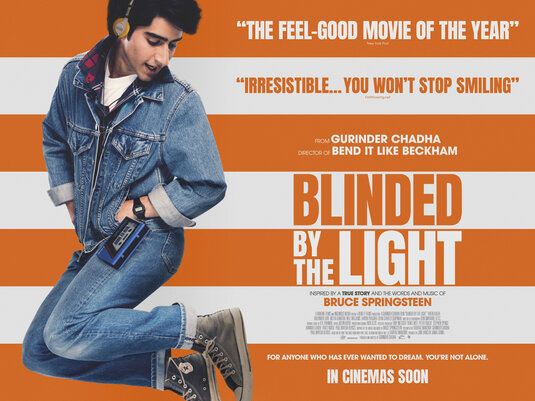
The film is much like a Springsteen song – a refuge for outcasts, people who feel stuck in their situation, and want a change.
MUSICAL(?)
I knew close to nothing going into this movie. I was surprised that it basically functioned as a musical if your definition of musical is a character needing to express their feelings through song. Except this time, it was Bruce Springsteen songs. That made it that the movie created an almost in between realm where some moments were real and dramatic while some were surrealistic and romantic.
Characters start dancing and singing along during a relatively normal scene. The choreography isn’t perfect and the singing sounds pretty normal. It feels like the characters could almost be joining along even if it weren’t a musical. The genre line between musical and not is tiptoed and carefully balanced. This leaves with more of an intimation or suggestion of a musical more than an actual musical. We can then focus on the songs themselves and the lyrics rather than the dancing, the showmanship and the technique.
BEING PAKISTANI IN 80s UK
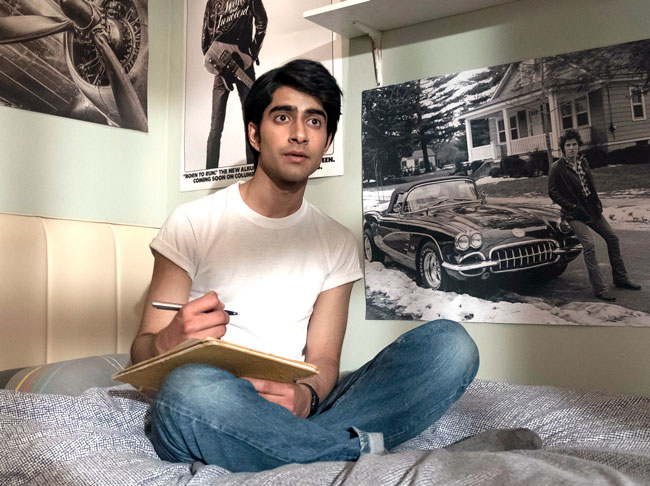
Javed is a Pakistani boy from Luton (near but NOT London) who felt trapped in his life. Like Springsteen did to him, we were able to understand Javed’s experience because it hit on recognizable feelings of not being good enough, feeling trapped and wanting to break free. I do not know what it is like to be Pakistani in England in the 80s, but I do know the feelings of questioning myself and wanting a release and in that, Javed’s story becomes widely relatable for any who’s experienced those feelings too.
For a little history, the National Front in England is a fascist political party with an anti-Pakistani sentiment, who held riots and consisted of many “skinheads” followers. Pakistanis were treated like lower-class citizens, and Blinded By the Light doesn’t shy away from the abuse Pakistani families received. One scene depicts little boys peeing in mailboxes, something that happened so often [to that Pakistani family] that they splurged for a plastic carpet that was easier to clean the piss off of.
Those feelings, while unique to Javed’s experience, do mirror the Springsteen-ian angst of wanting to get out of their hometown. For the boss it was the ennui of the New Jersey working class lifestyle. For Javed, it was feeling trapped in not only his family but his skin color and roots.
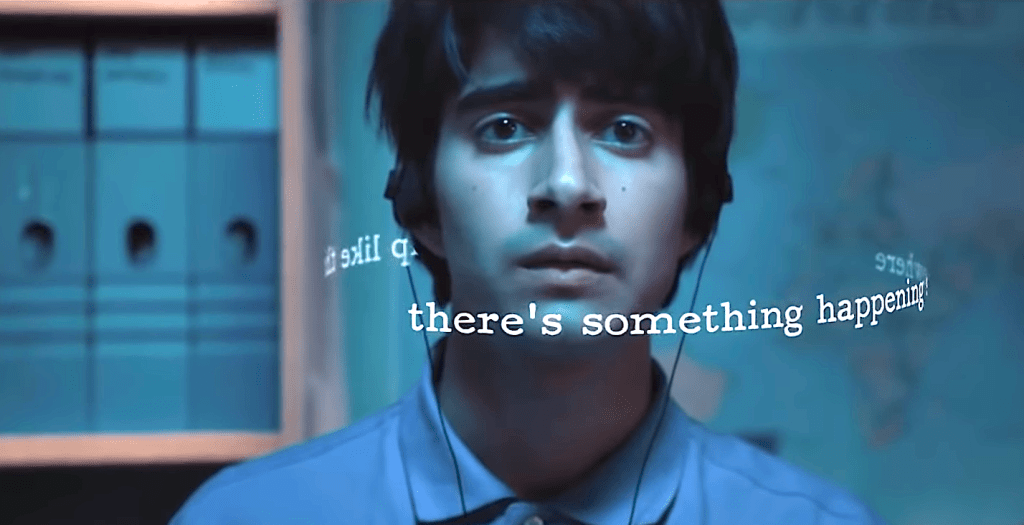
The first song that connects Javed to Springsteen is “Dancing in the Dark”, which makes total sense. Lyrics appear on screen “I wanna change my hair, my clothes, my face” “Man, I’m just getting tired, tired and bored of myself” and of course “There’s something happening somewhere”. Javed finds solace in these words, and we find solace in Javed’s solace. He is a writer, holed up in his room, escaping the strict parenting of the household and this music is the first semblance of freedom and independence Javed’s been searching for.
Up till that point, writing has been Javed’s escape, but now it is Bruce Springsteen songs (introduced by a fellow Pakistani friend of his). Javed believes if he follows everything Bruce does, he will be able to extricate himself from the life he knows and become successful, like Bruce. In so, he tears off the sleeves of his shirts, buys jean jackets and adopts an all around denim look. And yet, by pushing his family away and seeing Bruce as his only savior he alienates the people who care about him.
COMING OF AGE
The Springsteen songs serves as a sort of trampoline for Javed to tackle his life and issues head on, fearlessly and energetically. This culminates in a life affirming trip to Asbury Park , NJ while the title song “Blinded by the Light” (the original, not the Manfred Mann version) plays in the background. But at the end of the day, this is a movie where we see the main character mature and see things from everybody’s perspective and not just his own.
He sees how his sister takes time out of the day to dance at a day-only student dance club. He empathizes with his father searching for work and his overworked mother trying to keep the family afloat.
“My dream is to build a bridge to my dreams, but not a wall between my family and me” – Javed
The lesson here is not that music is the answer, the panacea to life’s problems whether it be songs from the Boss or someone else. It’s that music can help guide us and realize our potential. Instead of trying to emulate someone else.









 Food and Film Reviews