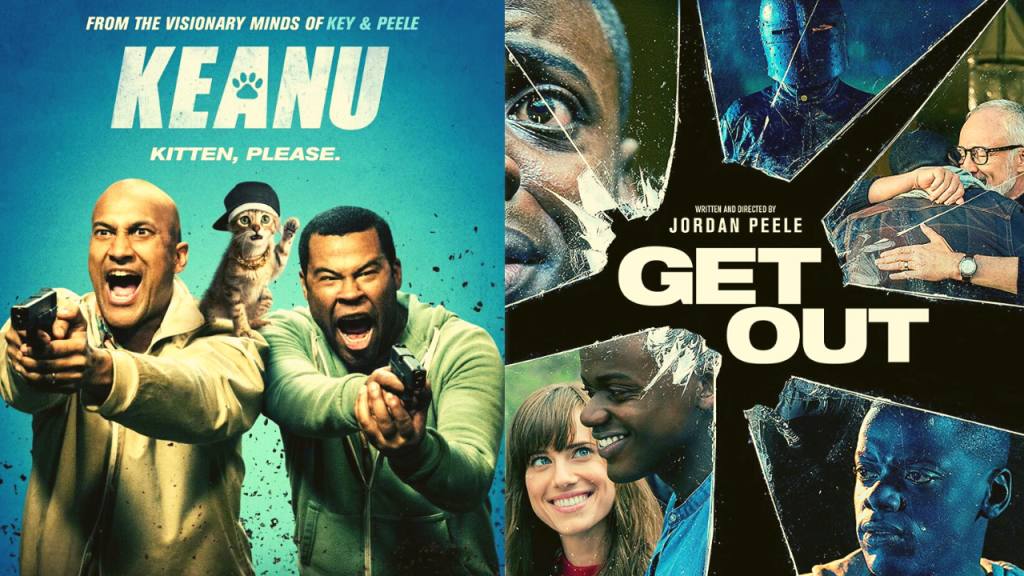
“Keanu” Paved the Way for “Get Out”

Hear me out. It’s easy to write off Keanu as a silly comedy about a kitten especially in comparison to Get Out, when the latter is one of the most impactful and intelligent movies about race and the black experience that ever existed. But with Keanu, Jordan Peele—along with long-time collaborator Keegan Michael-Key— paved the way for his fanbase to be ready to take him seriously as a director and as someone who has a valuable voice in the dialogue about racial makeup, and the identity woes that come with it. He also gave us hints early on about his predilection for the horror genre. In turn, this allowed Get Out to have massive success and critical acclaim. This exploration of black identity and of the horror genre is apparent all throughout Keanu and also prior to that, on Key & Peele.


Black Identity

As two biracial writers and performers, Key and Peele often explore their own blackness through their art and the unique perspective of being biracial in the Obama-era. 

This sums it up pretty well:

The identity struggle surrounding the extent of their blackness plays a crucial role in some sketches from their hit Comedy Central show. Namely, Soul Food, Dating a Biracial Guy, Obama Meet & Greet, and many more.

But while Key & Peele did not shy away from racial conversations, Keanu dove deep into a very specific exploration of black identity. Specifically, that acting “hood” was acting “black”, thus equating a certain attitude with an accepted and expected societal role disparagingly attributed to adult African-American males. Scared that their whiteness was a liability amongst other black people, Keanu looked into the recesses of the role of a black man in society, a theme used in Get Out as well. Rell and Clarence must don a sort of “black character” in Keanu, in order to infiltrate the tough gangster operation who stole Rell’s cat. For them to be respected and welcomed into that organization, they speak in a lower tone of voice, hide their emotions and use the n-word. This functions as a beautifully succinct depiction of the routine code-switching that black men face, and the behavioral expectations that come with skin color.
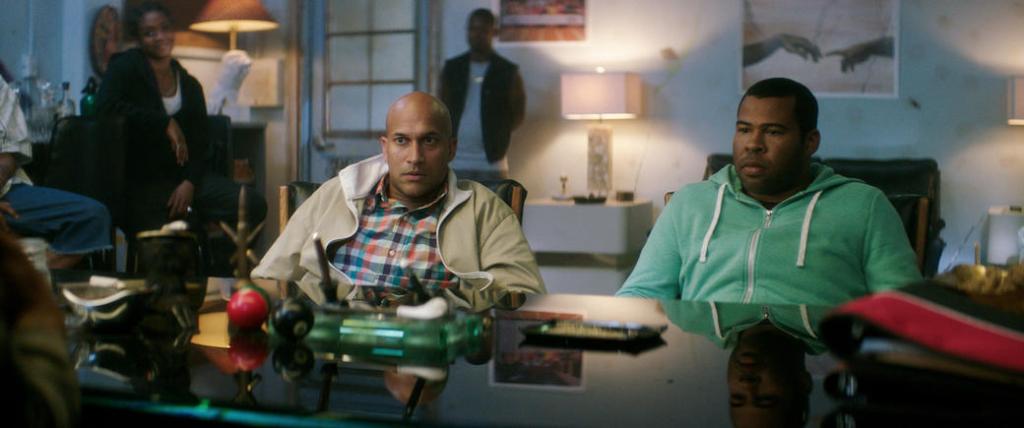
“Clarence: Yes, I’ll take a white wine spritzer

Rell: Clarence, you can’t talk like that here!”

So while the premise of Keanu is pretty comical (a dramatic search party for a kitten) that doesn’t mean the essence of the comedy and what’s being said underneath isn’t an honest examination of the issues black men face today. Get Out tackles those same themes more directly and more artfully, which is the reason it won Best Original Screenplay at the Academy Awards, but comedy can open up a dialogue and communicate a message just as well.

Comedy is a great way to say what you want to say. To couch truths under jokes and slowly invite your audience to think critically about a situation. Jordan Peele, a massive horror fan, saw the similarities between both comedy and horror genres and used it to his advantage.


The Horror Genre

A lot of horror is predicated upon the same structure as comedy. Build tension →  release tension; set up scenario → unexpected reveal. It would make sense that a comedic master could transpose his similar set of skills to horror.

Since Jordan Peele first started concocting Get Out in 2008 when watching the Obama-Clinton debates, both fighting for the Democratic nomination for that year’s election, we know that the story of Get Out was brewing in his head while he made Key & Peele (2012) and Keanu (2016). We also know Peele is a big fan of horror films.

As a showrunner and writer, Peele was able to include many sketches with a horror lean to them in Key & Peele. This is most apparent in parodies of iconic films from the genre, like these…

I would add “Continental Breakfast” as well, which refers to The Shining’s ominous ending.

In the clip above, we see the language of horror being expertly used. Though it’s for comedic purposes and for twisting those situations on their head, the sketches ring true because there’s a deep knowledge of the genre. Dismantling the oft-sought tropes we so commonly associate with horror requires a certain depth of knowledge regarding its mechanics. The comedy, and the point of each sketch, arises in these questions: “what if?” and following that, “how would that look like?”. That is how the idea is formed and what makes up the clear premise of the scene. “What if someone mistook a zombie raccoon with a zombie during the apocalypse? How would that look like?” 

“What if the torturer gets tortured? How would that look like?”

“What if zombies were racist? How would that look like?”

The frenetic dialogue, the quick pacing of the camera moment, the visual vocabulary of special effects, color tones and wardrobe/makeup. They’re all present here. We can see Peele’s knowledge of horror at play.

By using the comic device of “what ifs?”, Peele allowed us to explore the horror genre through the lens of critical thinking. Most horror genre movies have a message. Dawn of the Dead is about mindless consumerism, The Babadook is about grief, and so on… 

In the same vein, Get Out is about slavery and the prison industrial complex or more globally as the experience of being a black man in contemporary American society. 

Get Out uses that technique of “what if” by showing us a manifestation of what it feels like to be black today. “What if hypocritical blank support and the appropriation of black culture was concretized in an apparent way?” “How would that look like?”. We see the deeply meaningful and gripping sequence in Get Out when the hero, Chris, falls in the empty hypnotic abyss of the “sunken place”. In the same way, Keanu showed this sort of other-wordly, dream-like, metaphorical sequence when Clarence gets visited by Keanu as a spiritual guide. Both scenes are very different in tone and in message, but by including that sort of surrealistic scene in Keanu, Peele primed his audience to be ready for an even more impactful use of that type of scene in Get Out.


Though both Key & Peele and Keanu helped pave the way for Get Out, Keanu ultimately cemented Peele as a feature film screenwriter who can create box office appeal. Sketches are short by nature, and writing Keanu proved that Peele could sustain the pace of a longer movie. I’m very thankful for both these movies for different reasons and I believe that Peele’s previous work informed Get Out and that his departure from comedy to horror is less unexpected than we might think.
Get Out

Rating: 5 out of 5.

Keanu

Rating: 4 out of 5.

Key & Peele

Rating: 4.5 out of 5.

“Brooklyn Nine-Nine” : Sitcom Diversity Done Right

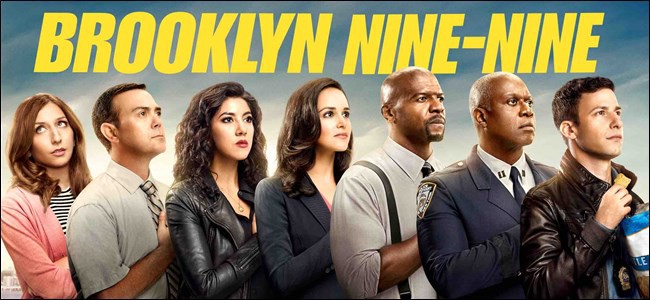
With quick back and forth, clever writing and a talented cast, Brooklyn Nine-Nine has earned its spot as as one of the most side-splitting half hour comedy TV shows of the last ten years. But most people don’t think of it when they picture a good reference for diversity in network sitcoms. After all, it’s a workplace comedy about goofy cops where Andy Samberg plays the lead. But Brooklyn Nine-Nine is actually one of the rare, high-profile comedy shows that demonstrates how diversity makes for better TV and storytelling.

So how does Brooklyn Nine-Nine do diversity right?


The Characters are Not Defined by their Race or Sexuality

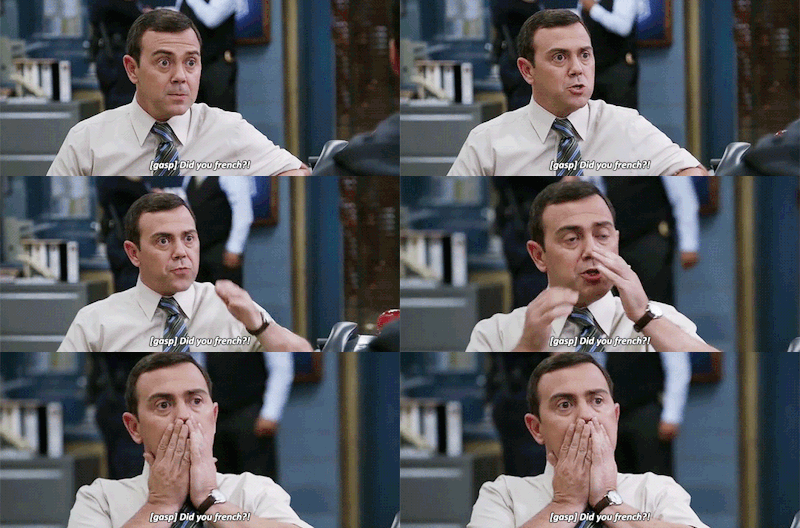
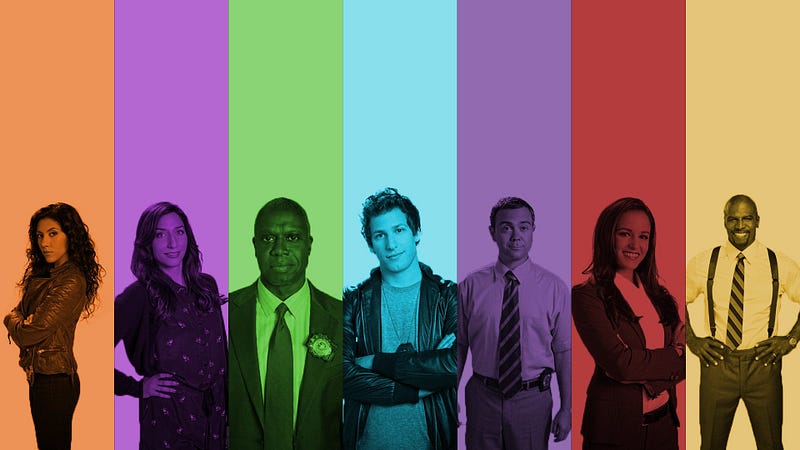
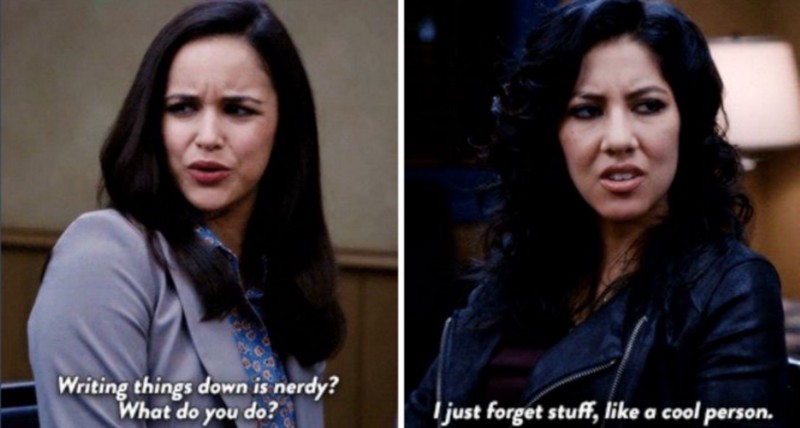
Each member of the squad has their own individuality. Through characterization and avoiding stereotypes, we start to see them as three dimensional people. Even though their genetic makeup is not ignored, it isn’t the extent of their character. For example, Rosa Diaz and Amy Santiago are both Latina police officers. In the show, they don’t constantly mention their ethnicity but instead they casually refer to it, like a person would in real life. The other members of the precinct relate to them more through the fabric of character and the comedy comes from that. Amy is a Type-A who gets off on organization and Rosa is a badass who never talks about her emotions.

A concise encapsulation of their personalities.

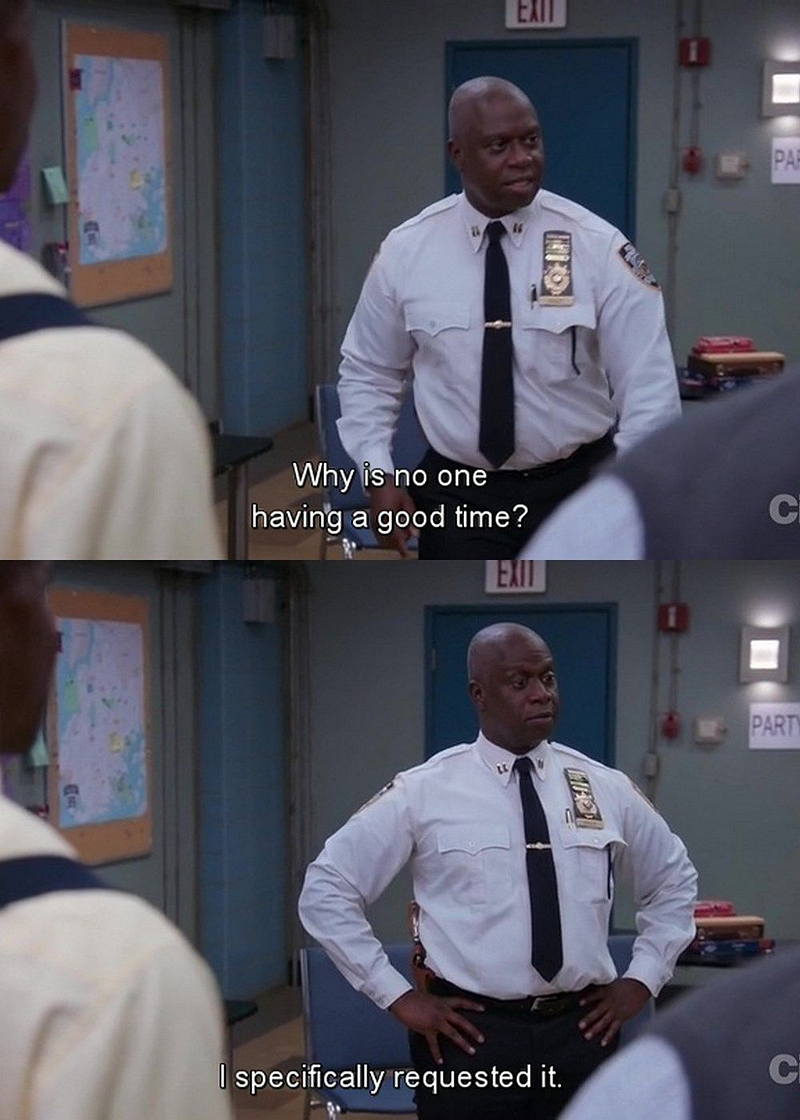
Another part of the squad is Captain Holt, a gay and black police captain. He has a husband and likes classical music, but at work he’s mostly known for his robot-like love of order and precision. The jokes directed at these characters’ expense are not based on things they cannot change (like their race/ethnicity or sexuality) but by the personality they exhibit, their aforementioned quirks. A TV show that wanted to forcefully shoehorn diversity without having real, relatable characters like these would have had the Captain’s sexuality and race (or Amy and Rosa’s ethnicity) as the punchline for their jokes. The unchangeable essence of their character played for laughs. In Brooklyn Nine-Nine, their race and sexuality are just one of the facets that make up their character. The comedy comes mostly through the characters’ distinctive mannerisms.

On the other side of the spectrum, Hitchcock and Scully are two straight, middle-aged white men who are more inappropriate than the rest of the squad. The humor that stems from these two characters is directed mostly at them and not shared with them. There is a difference. Their inappropriate behavior is not accepted and called out. The butt of the joke is rather “just how gross, gluttonous, out-of-touch or lazy can Hitchcock and Scully be?” as opposed to a complicit acceptance of their off-handed remarks.


The Precinct Exhibits Respect and Self-Awareness

When Charles has a crush on Rosa in the first season and she doesn’t reciprocate his feelings, he does not press the issue, make her feel uncomfortable or try to convince her. Instead, he understands, moves his affections towards someone else and treats her as a friend and respected colleague. In that same season, he even takes a bullet for her. But it was only out of professional duty and never expects any affection in return. He is also a big supporter of her subsequent love life!

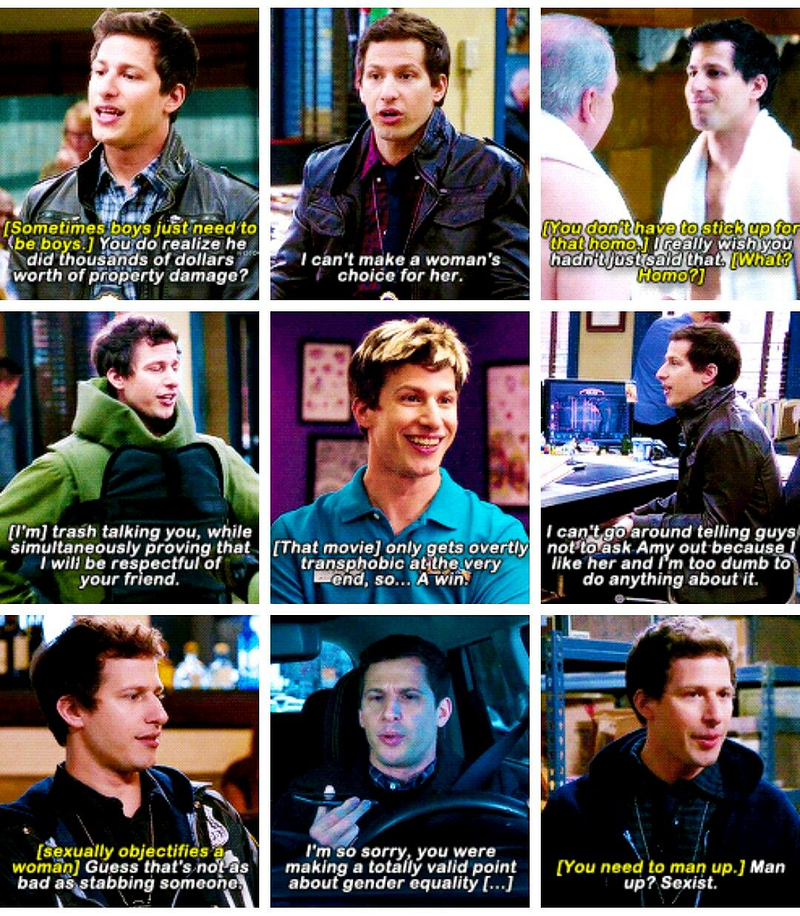
Also, Jake is acutely aware of his male privilege and of toxic masculinity, and attempts to dismantle it — not an easy feat for a cop whose favorite movie is “Die Hard”. Here are a few considerate, feminist quotes to get an idea:


The show tackles uncomfortable topics

Though it’s a comedy, Brooklyn Nine-Nine doesn’t shy away from some pretty heavy topics. A run-of-the-mill sitcom might explore some darker realities (maybe in the form of an anti-drugs PSA?) but this show goes to the heart of some current issues, like racial profiling and sexual harassment.

Racial Profiling 

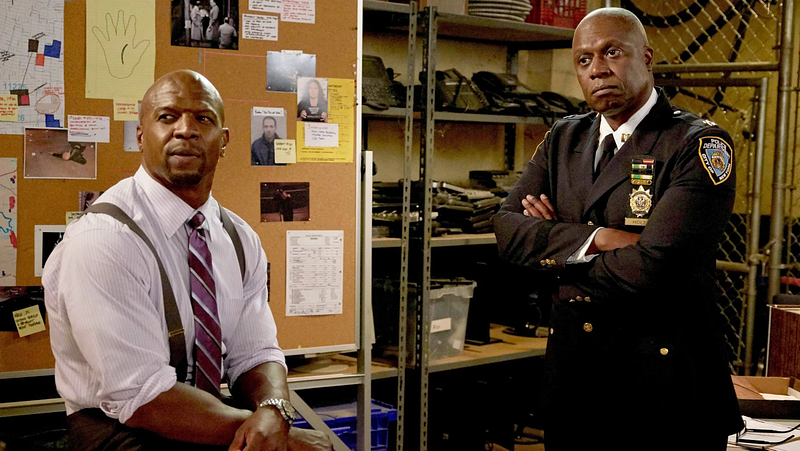
In Season 4 Ep. 16 “Moo Moo”, we see Terry confronting a harsh truth about American society. While Sgt. Jeffords is off-duty in his neighborhood, he is arrested by a fellow officer, for the simple reason that he’s a black man. The African American paradigm of being targeted, profiled and unjustly abused or attacked is a sad racial reality that continues to exist in this day and age. When you look at the likes of Trayvon Martin, Michael Brown, Philando Castile and countless others; getting aggressed and shot by a police officer can become a daily fear. And it’s especially hard to know that the police officers who harm them are usually protected under vaguely defined laws and don’t suffer any retribution for their abuse of power or murder. If interested in reading more, read this illuminating LA Times Article. In “Moo Moo”, Terry also has to grapple with the ethical corruption and racism within his own police organization. 

Sexual Harassment

Likewise, in “He Said, She Said” (Season 6, Ep.8) Brooklyn Nine-Nine doesn’t tip-toe around the issue of sexual harassment in the workplace. Amy takes on a case that appears to be an innocent office-related injury at first glance. When she digs a little deeper, she finds out the injury was a result of self-defense against sexual assault. But the victim initially decides to drop the case because of the negative effect coming forward would have on her her career. On top of that, Amy wrestles with the memory of her own assault which happened when she became a detective. By relating it to her own experience, we see how morally abject and predatory a police station can be. We also see that fighting for this case is helping Amy cope through her own trauma. By delving into Amy’s psyche, we explore the issue of having to face your aggressor at your workplace through the lens of a familiar character.

So while these are both very charged and painful topics, Brooklyn Nine-Nine’s approach is tactful. They highlight the injustice and the struggle and air topical episodes that address everyday issues that pertain to police brutality and the “#Me Too” movement. They create an inclusive environment where different voices are being heard and different experiences are broadcasted. By doing that, we get a richness not only in the substantive variety of characters but also in the depth of the storytelling. 


Through the use of three dimensional characters and by tackling urgent topics that might be glossed over in less aware sitcoms, Brooklyn Nine-Nine shines through as a solid reference point for how to use diversity in comedic television.

“Terrace House”: The Kinder, Gentler Japanese Alternative to Reality TV


Inside the craze that’s taking over Netflix

The first group of members. From left to right: Shion, Tsubasa, Taka, Ami, Miyuki and Yuudai.

I’ve only watched Terrace House: Opening New Doors but there are several different options based on several different Japanese cities. There’s Tokyo, Aloha State and more. I haven’t watched all of the different ones so I can’t comment on those directly, but they all follow the same premise as Terrace House: Opening New Doors.

The premise is simple and conventional. Six young people live in a house and we follow their interactions and budding romantic relationships. It’s like “The Real World” Japanese edition. And “The Real World” is arguably the first popular reality TV show format. But while Terrace House keeps in tradition by using the same general format; the feeling is a lot different.

New members Shohei (far left) and returning star Seina (middle with furry boots) replaced Yuudai and Miyuki.

For starters, Terrace House: Opening New Doors takes place in Karuizawa. It’s in the Nagano prefecture —  a bullet train ride away from Tokyo and a short car ride from the ski slopes. More of a small town feel, we see lots of natural scenery, snowboarding and playing in the front lawn. The pace is slow and the turn of the seasons allows us to see the house year round.

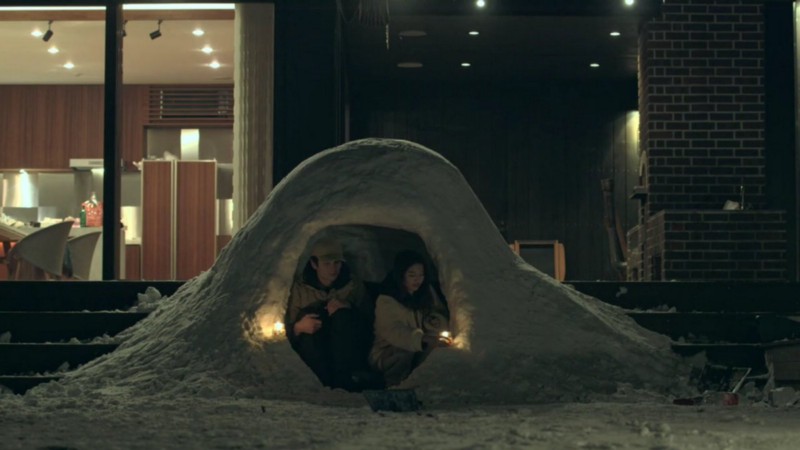
An igloo they made in the front lawn during the wintertime.

What exactly makes it gentler? Here are the main differences.

The Naturally Occurring Drama 

Whether it’s The Bachelor or Real Housewives or pretty much anything that can be considered Reality TV, a lot of it is either fake or very well orchestrated. Reality TV is ironically not very “real”, but more artificial. That doesn’t make it any less entertaining, much like wrestling is for their fans. It’s about the stories, the betrayals, the power struggles. That is why people tune in. Whereas the Bachelor was in hot water for a copious amount of producer intervention (they would tell contestants that they won so that they’d be upset when they didn’t, amongst many other things); Terrace House is unscripted and doesn’t seem to be orchestrated. 

There are no quick cuts, no slow mo reaction shots, no “throwing water in the face” moments or instances where someone slaps another. 

Instead, the drama organically swells from the discomfort of getting used to living with strangers and with group dynamics. Friendships form, love interests take shape but in a slow and patient pace. Love triangles are very respectful of people’s feelings. And love stories are kindly followed from a distance.

Tsubasa and Shion

The best romance story was between Shion and Tsubasa. It took a few months between their first date and their first kiss. We were able to see a more natural development of their feelings, constantly evolving with each thoughtful gesture or stolen moment rather than a more sensationalized storyline. They did not scream at each other, nor did they passionately make out. This was… oddly refreshing.


The Freedom of the Contestants

Adding to the absence of constructed drama or producer interference, the contestants are pretty much free to do whatever they want during the day. They still work at their jobs, still meet up with their friends; maintaining their careers and social lives. This is more relaxing because often, the show is the reality stars’ livelihoods, so they fight for the spotlight and blow little things out of proportion.https://filmreviewsblogfood.wordpress.com/media/3f22040ec98a5bbaf9ee52fd8dac873bRemember this iconic KUWTK moment?

Terrace House members can also choose when they want to leave. They are never pushed out of their comfort zone and can leave the house at any time, for reasons as simple as: they’re not finding love, they want to focus on their career, or they’ve gotten enough from the experience. This freedom is quite different than “Survivor” or “90 Day Fiancé” where the rules and time parameters are already set in place. Because it’s a leave-when-you-wish mentality, Terrace House has a lot of turnover. The cast changes completely by the end and we see a lot of new faces!

Two separate rooms. On the left is the boys room and on the right is the girls room.

Litany of commenting hosts

The third way it’s different than a lot of the reality TV we normally digest was the presence of many hosts, called “panelists”. There’s usually one standard host on most of the Western-world reality TV, typically as someone who explains the rules of the situation to the contestants or as their moderator. The hosts interacts often with the contestants. In Terrace House, the hosts never interact with the people living at the home. They are instead, watching the show with us and then commenting on what they saw. 

They interact more with the viewer and share opinions on contestants’ personalities and concoct predictions about romantic entanglements. There is also as many hosts as there are house members. Six hosts (also divided into 3 men and 3 women) who talk for a a while after every act break. The hosts are an integral part of the show and become just as important as the house members. You wait to see what they have to say, and try to make sense of what we all just witnessed together. Having this “critique chorus” helps the viewer understand what’s going on and feels like a gentler way to show Reality TV. By bringing the audience into the conversation and not telling us how to feel, it provides a more organic experience. We are all watching the same thing in real time.


All these things make Terrace House a nice Japanese alternative to reality television. Refreshing, patient and free: a kind approach.

Rating: 4 out of 5.