
A playful movie that looks at the murder mystery genre and says: “I’ve got an idea .”
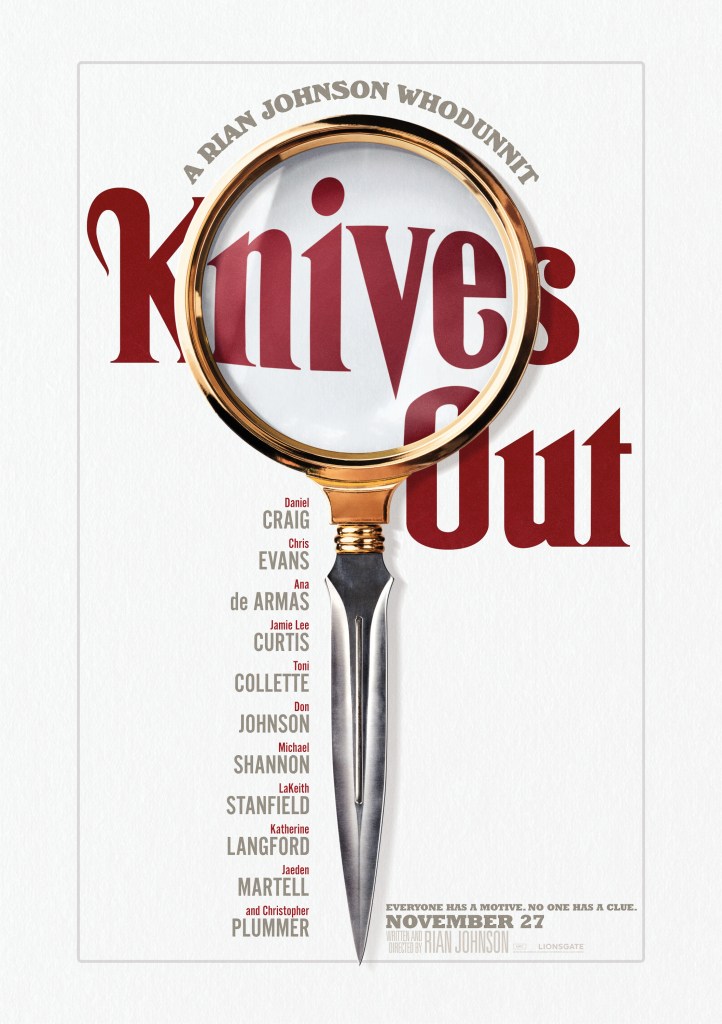
This movie was an awful lot of fun: why?
GENRE PLAYFULNESS
Genre playfulness is when someone creates a piece that nods to the iconic films or works from that genre but delivers it in a unique style. A genre has its own language and world, and although playful, genre-specific movies might contain cliches or use recognizable tropes, they do not veer into spoof territory. Instead, they function as a fun(ny) homage to the genre.
The language of the murder mystery genre might come in the form of a classic storyline (murder occurs, all-knowing detective tries to pick murderer out of a group of suspects who were all present). It also has a certain aesthetic, fancy Victorian-era mansion tucked away in the woods. An autumnal decor, yellow and brown leaves that remind us of the spookiest season of all, Halloween. Trick doors to an abundance of rooms that display opulent wealth. There’s also usually a party and the guests become suspects. A lot of this is owed to the world forged by crime fiction author and world’s best-selling writer, Agatha Christie.
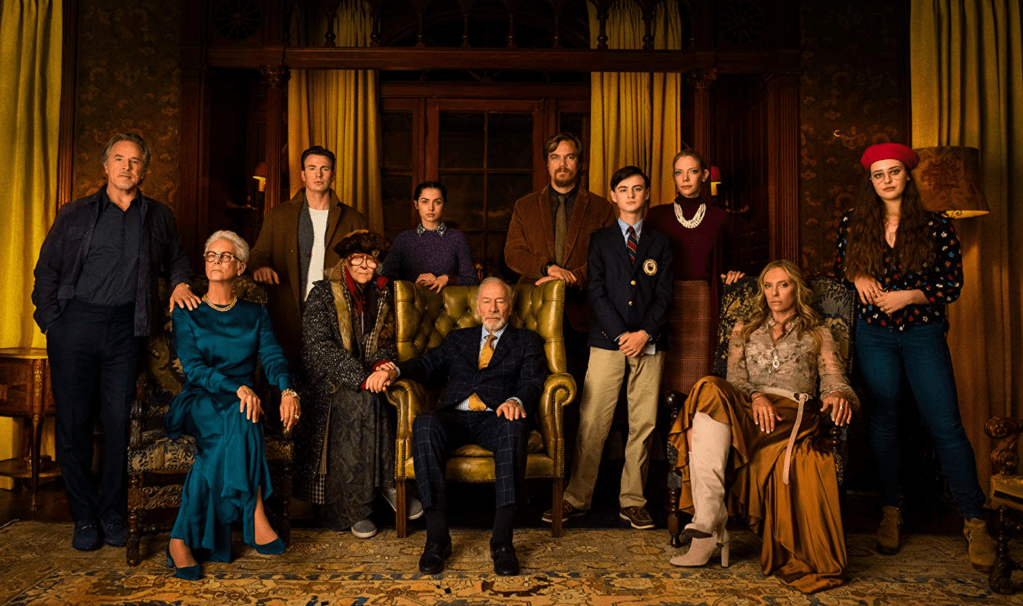
Knives Out uses a lot of these classic components. The setting is a creaky mansion tucked away in the forest. There’s an all-knowing detective, complicated family dynamics and a murder the night of a party, in which the guests —the family— are the suspects. The family members themselves seem straight out of an Agatha Christie novel, each having a motive creating a shroud of doubt as to who the real killer is. The film explores each character’s depth (and possible motives for murder) so it veers away from spoof territory.
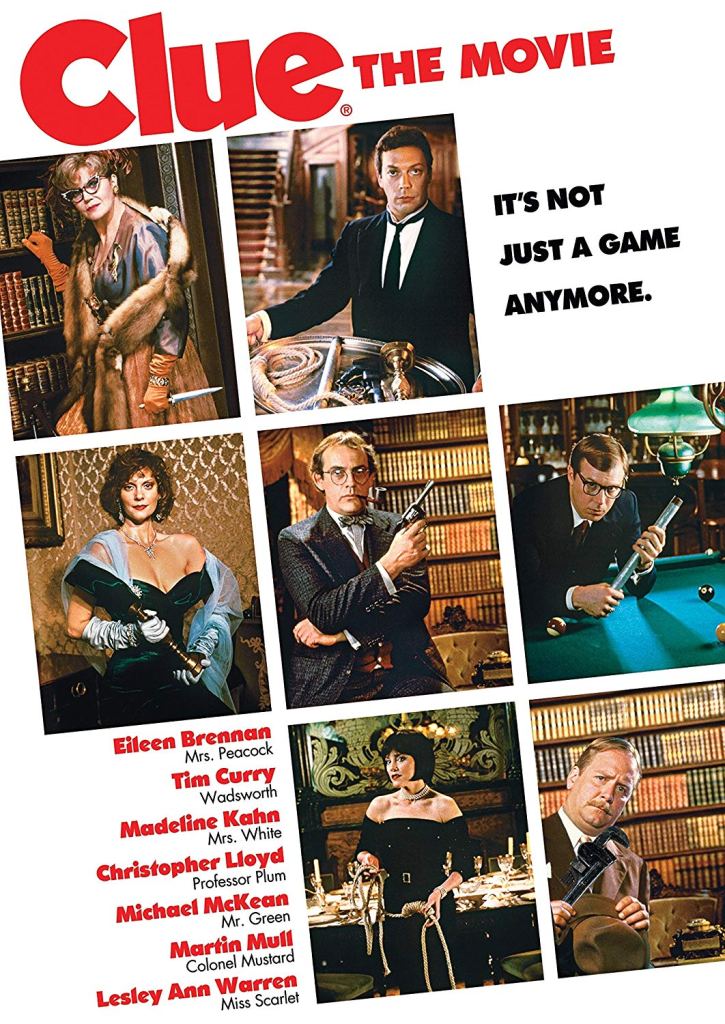
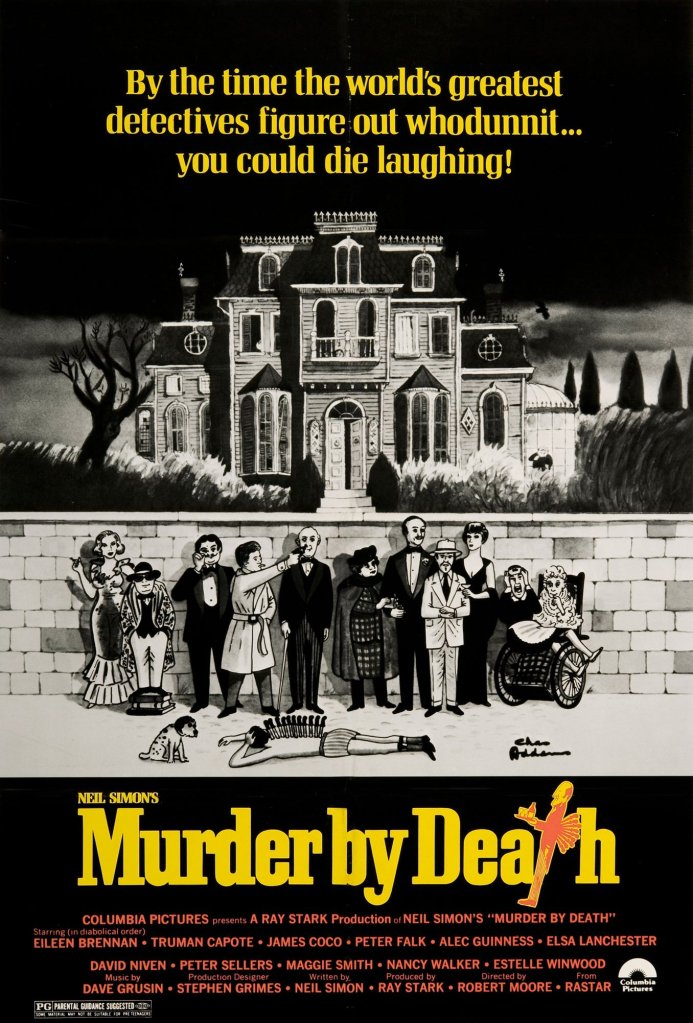
If interested in parodies of the murder mystery genre, Jonathan Lynn’s 1985 film Clue or Neil Simon’s Murder By Death are worth checking out. As opposed to Knives Out, the characters in these movies are self-aware and ape the recurring situations or cliches of the genre. Clue reimagines the beloved board game into a story packed with jokes and true to its deceptive fashion, the movie had three different theatrical endings to confuse the audience across America. Murder by Death takes all the well known detective-types and puts them in a movie together. There are substitutes for: Hercule Poirot, Sam Spade, Charlie Chan, Miss Marple and so on.
Since we know that Knives Out is not a spoof, the familiarity of the world being set up is only used so that it can be played with later.
So how does this film play with the genre?
Well, for one, as opposed to the common whodunnit? stories, we find out the killer little less than halfway through the movie. Instead, this movie asks the question: who hired the detective? This reversal of expectations is part of the fresh vision for the movie.
Also, there are some modern, and usually funny, updates on common characters. As opposed to the usual petulant entitled child, we get an internet troll son masturbating in the bathroom. As opposed to the hackneyed devilish butler (the butler did it!), we get a kindhearted and devoted nurse/caretaker. The grandmother who seems senile plays an important role in the end, etc.. These character variations are specific to Knives Out, which make the movie more compelling, unique, and therefore more fun.
Also, Knives Out use of humor serves to elevate and make the movie stand out.
HUMOR
If comedy often operates as cutting tension, it makes sense that the murder mystery genre would be ripe for humor. These crime-fiction stories have a certain poignancy and suspense to them, and Knives Out uses bathos to its advantage.
That being said, I was not expecting it to be this funny.
There were lots of moments I actually laughed out loud. My favorite part was hearing the folksy wisdom of Daniel Craig’s Detective Benoit Blanc who delivers insightful analyses using metaphors with commonplace foods in New Orleans twang.

When Mr. Blanc plays a foreboding key on the piano, we are thrown in the world of a brilliant detective’s antics. The audience does not quite understand what’s going on or why he hits the key while interrogating them. The characters’ confused and blunt reactions to that cut the tension by mirroring the audience’s confusion.
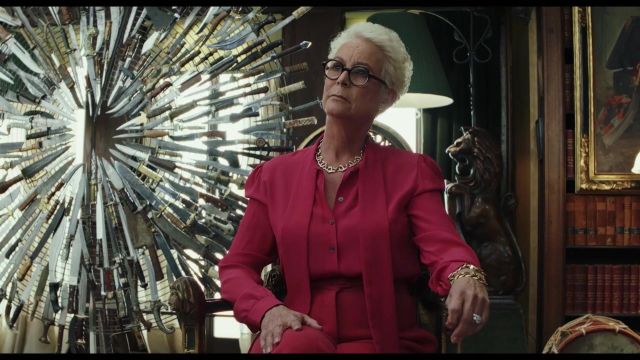
“The party? Pre my dad’s death? Oh, it was great.” – Linda
Additionally, the sincerity and kind-heartedness of the Ana de Armas’ character, Marta Cabrera, provides some endearing laughs. Marta is the heart on her sleeve caretaker and throws up at the thought of lying. That innocence makes some for sweet, if not a little gross, comedic moments.

There are also little nuggets of recurring jokes added in. The most engaging one being the family who keep getting Marta’s ancestral country wrong, which ultimately proves how little they think of her as family despite their rote repetition of that phrase.
SPOILERS AHEAD!!!!!!!!
TWISTS
Structurally, I appreciated the full circle quality of the opening shot and the closing shot with the mug that reads : “My rules, my house, my coffee”, but now with a different meaning put onto it. The blocking and metaphorical placement of the closing shot too was a powerful way to end. Marta, looking down on the family from the balcony, at home and wrapped up in cozy blanket sipping from a mug. The family, meanwhile, stand in the driveway, bereft of their expected inheritance and look up to her, the new owner of the house and estate.
With a lot of whodunnit? stories, the clues lie in the details and all information might be used later on. The twist of the knife being fake was set up in the beginning when the patriarch of the Thrombey family tells Marta as he stabs his card table that a trick knife is sometimes indistinguishable from a real one. Ransom’s final act of defiance and attempt to kill Marta is then halted because he used a trick knife. This underlying trickery parallels the deceitfulness of his protege grandson, so it seems like a fitting conclusion for Ransom’s character.
FINAL THOUGHTS
The family is played beautifully, you simply love to hate them. The acting in this all star cast is a triumph, especially the main character who is a revelation.
I also appreciated the message of the film. Marta’s good heart never wavered and that is what was rewarded in the end. She was honest to Det. Blanc throughout the film and saved Fran, even though it was against her best interest. This shows that sometimes it pays to be truthful in a world of deceit and lies.

In the words of the lady in back of me at the movie theater: “Pure moviegoing entertainment” – ⭐⭐⭐⭐½
 Food and Film Reviews